
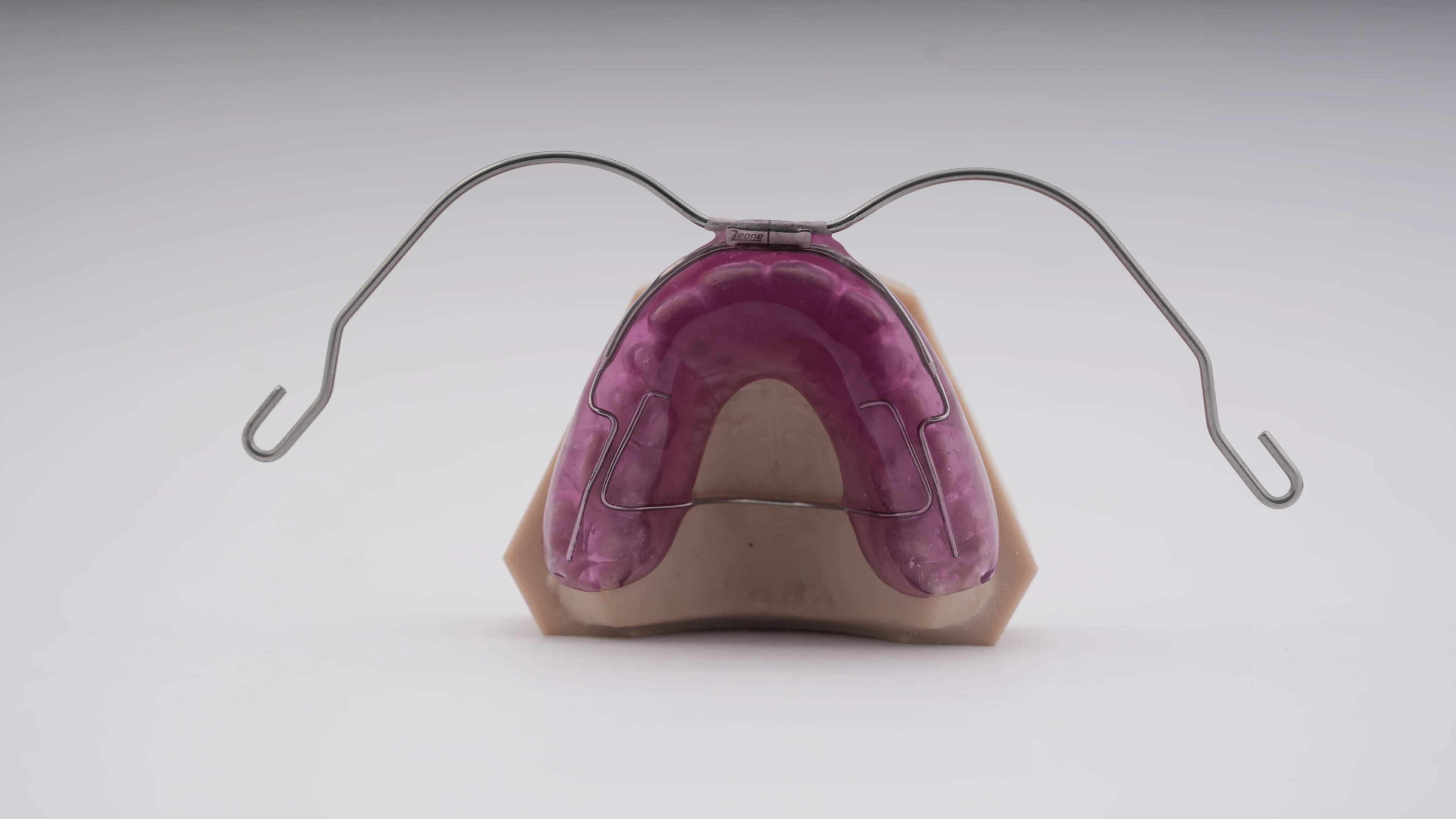
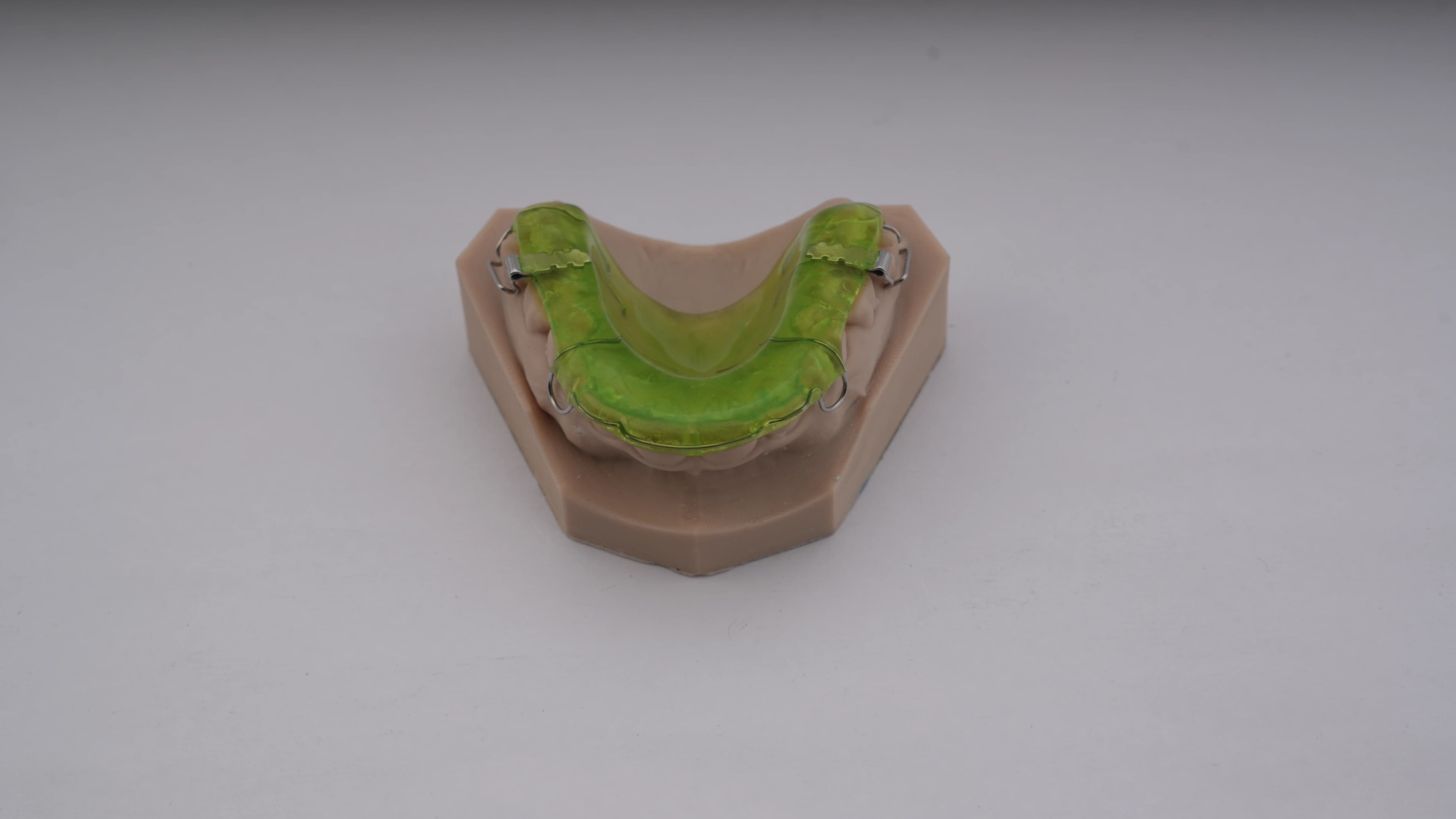
Maxillary Intrusion Splint (with Defined Path of Insertion)
Indications:
Skeletal open bite with excessive posterior vertical dimension.
Posterior dentoalveolar over-eruption contributing to anterior open bite.
Vertical maxillary excess cases requiring molar intrusion.
Growing or adult patients as a pre-surgical or camouflage measure.
· Multiple erupting teeth where eruption may interfere with proper seating and adaptation of the splint during treatment.
· In situations where conventional clasp-based anchorage cannot be provided.
Contraindications:
Poor periodontal support of posterior teeth.
Poor oral hygiene (risk of plaque accumulation under splint).
Non-compliant patients (removable variant if given).
Severe skeletal open bite requiring orthognathic impaction of maxilla.
Corrects:
Intrudes maxillary posterior teeth (molar/premolar region).
Reduces lower anterior face height.
Facilitates counter-clockwise mandibular autorotation → improves overbite.
Corrects skeletal/dental anterior open bite.
Design:
Full-coverage acrylic maxillary splint covering premolars and molars, extended palatally for rigidity.
Fabricated with a defined path of insertion (parallel walls in posterior region) to ensure retentive and precise fit.
Reinforced with wires/clasps or bands on first molars for anchorage.
Splint may incorporate attachments/hooks for applying intrusive force (e.g., elastics or skeletal anchorage).
Philosophy:
Distributes intrusive forces uniformly to posterior maxillary dentition.
Controlled force application (~100–150 g per molar) via extraoral traction or skeletal anchorage.
Intrusion of posterior teeth → counterclockwise autorotation of mandible → closure of anterior open bite.
Modifications:
Can be combined with High-pull headgear or cervical-pull headgear with vertical elastics.
Mini-implant assisted maxillary intrusion splint (MIAIS) for skeletal anchorage and more predictable molar intrusion.
Posterior bite blocks incorporated for additional vertical control.
Bonded version for non-compliant patients
Advantages:
· Precise path of insertion → ensures stability, retention, and ease of placement/removal.
· Effective anterior bite opening → intrudes maxillary posterior teeth, helping control vertical dimension.
· Improves smile esthetics → useful in treating anterior open bite and gummy smile cases.
· Distributes intrusive forces evenly across posterior teeth, reducing risk of tipping.
· Custom-fit splint design → enhances patient comfort and compliance.
· Facilitates skeletal anchorage integration (can be combined with miniscrews or TADs).
· Durable and lightweight acrylic with metal reinforcement → long-term appliance stability.
MaxDent precision fabrication → ensures accurate adaptation and superior finishing, providing a defined path of insertion that permits unobstructed tooth eruption while minimizing the need for frequent adjustments or replacements.