
Fast Back Rapid Molar Distalizer – Palatal
Indications:
Distalization of maxillary first molars in dental Class II cases.
Space creation for mild–moderate crowding without extractions.
Correction of mesially drifted molars.
Pre-orthodontic preparation to establish Class I molar relationship.
Contraindications:
Skeletal Class II discrepancies (mandibular retrusion → needs functional or surgical correction).
Severe arch length deficiency needing extraction.
Poor oral hygiene or caries risk.
Severe vertical growth pattern (risk of molar extrusion/open bite).
Corrects:
Dental Class II molar relation.
Molar rotation (limited correction).
Gains arch length via distal movement of molars.
Design:
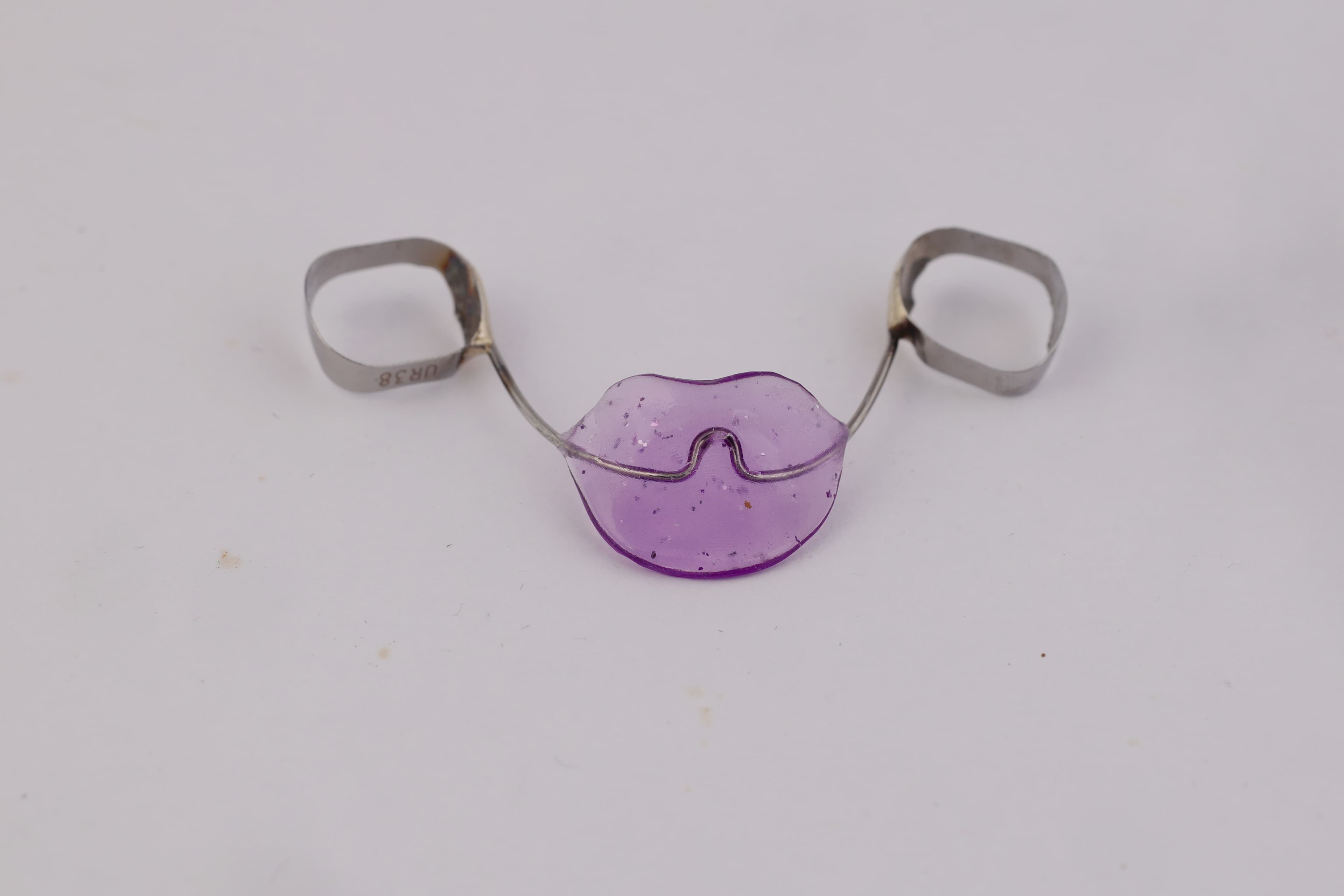
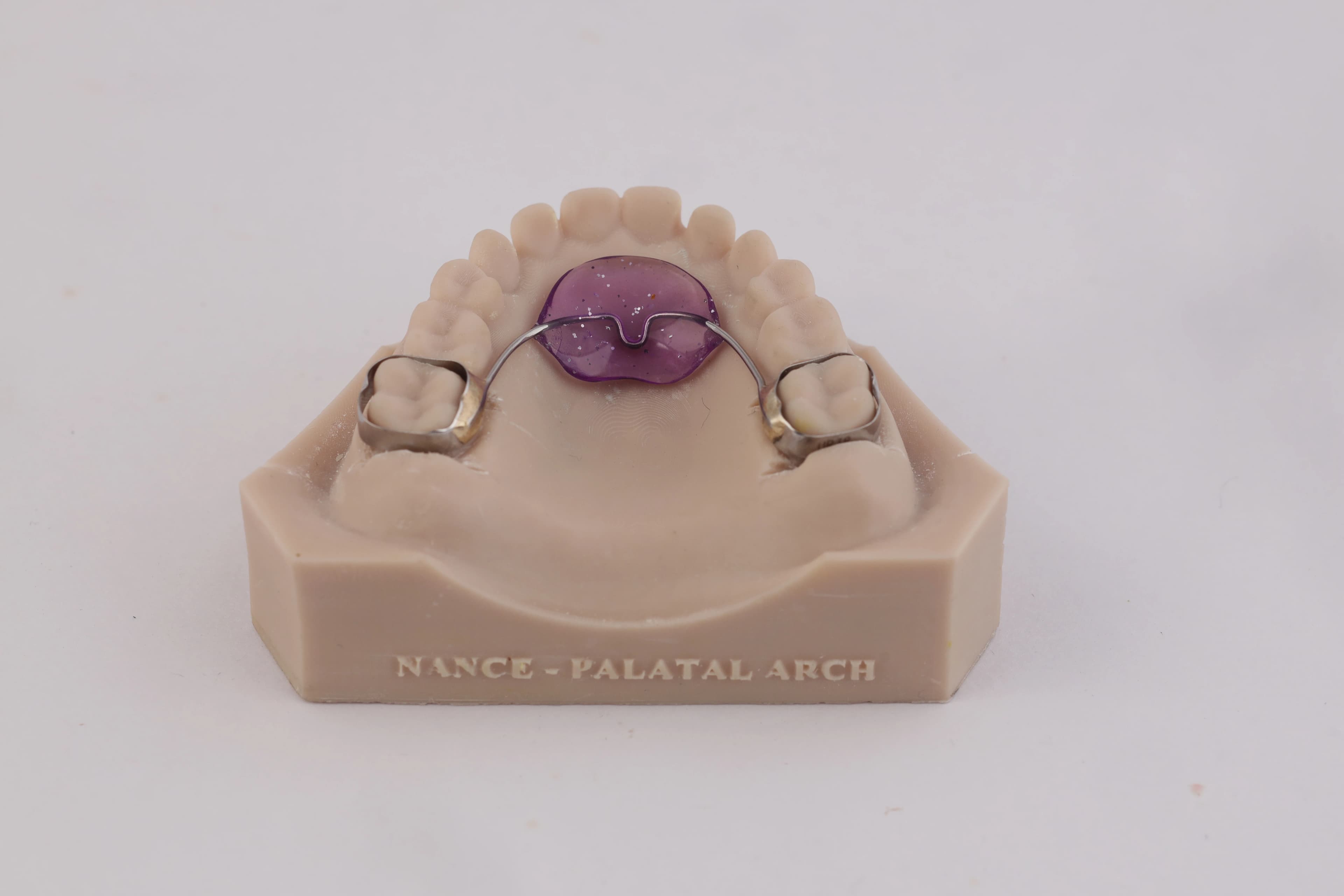
Palatal acrylic button (Nance button) resting on anterior palate as anchorage.
Bands on maxillary first molars connected via tubes.
Nickel-titanium open-coil springs or screw system mounted on palatal arch, generating distalizing forces (≈150–200 g per side).
Force applied along palatal side → controlled distalization with reduced tipping compared to buccal appliances.
Appliance is completely intraoral and compliance-free.
Philosophy:
Non-compliance distalization using intraoral springs/screw mechanics.
Palatal force vector → closer to center of resistance of molars → better bodily movement control than buccal distalizers.
Anchorage reinforced by palatal button and anterior teeth.
Generates light, continuous, physiological forces for molar distalization.
Modifications:
Skeletal anchorage–assisted Fast Back (miniscrews + palatal button) → eliminates anchorage loss.
Asymmetric activation for unilateral distalization.
Integration with fixed appliances for simultaneous alignment and distalization.
Can be combined with intermaxillary elastics or headgear for anchorage reinforcement.
Incorporating a Hyrax expansion screw for simultaneous maxillary expansion and molar distalization.
Advantages:
· Direct palatal anchorage – provides strong, stable support for molar distalization.
· Non-compliance appliance – eliminates dependence on patient cooperation.
· Controlled mechanics – linear screw-driven activation allows predictable molar distalization.
· Rapid space creation – efficient for Class II correction and crowding relief.
· Minimal tipping – delivers bodily distal movement of molars with reduced side effects.
· Compact palatal design – comfortable and less visible compared to buccal distalizers.
· Integration with fixed appliances – can be used simultaneously for comprehensive orthodontic treatment.
· Customizable – can be designed for unilateral or bilateral molar distalization